
Is Your Piston Filler Holding Back Production?
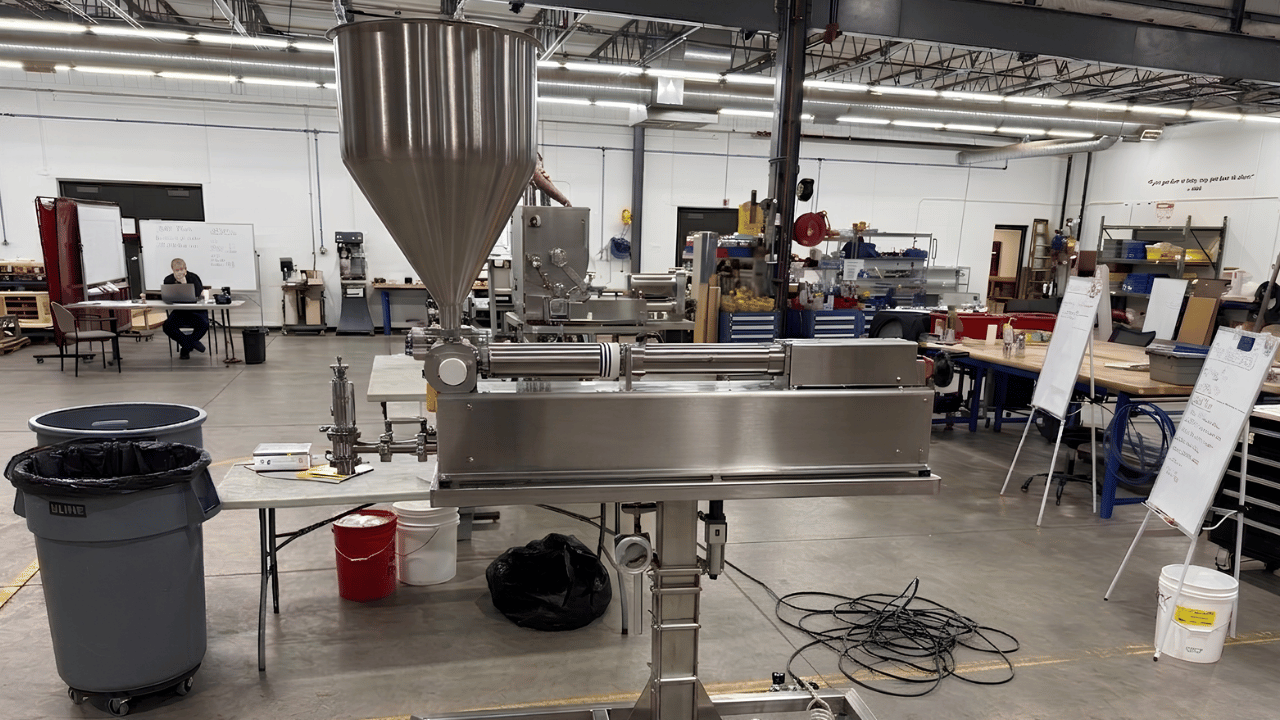
For many manufacturers, a piston filler becomes part of the background. It runs day after day, operators know it well, and maintenance has learned its quirks. As long as product keeps moving out the door, it's easy to assume the machine is doing its job.
The question isn't whether the machine still runs. The better question is whether it's allowing your operation to run as efficiently as it could.
Production demands change over time. Product lines expand. New container sizes are introduced. Labor becomes more difficult to find. Customers expect shorter lead times, tighter quality standards, and greater flexibility. A piston filler that met your needs ten years ago may now be limiting throughput, increasing operating costs, or requiring more attention than it should.
Here are a few signs your filling equipment may be holding your production line back.
Changeovers Take Longer Than They Should
Every minute spent changing products or container sizes is time the line isn't producing.
Older filling equipment often requires manual adjustments, extensive tooling changes, or trial-and-error setup before production can begin. Those extra minutes add up quickly when multiple products are scheduled throughout the day.
Modern piston filling systems are designed to simplify changeovers with features such as tool-free adjustments, recipe storage, and intuitive controls. The result is less downtime between runs and more productive hours on the plant floor.
Fill Accuracy Is Becoming Inconsistent
Inconsistent fills affect more than quality. Overfilled containers increase product giveaway, while underfilled containers can lead to rejected product, customer complaints, and unnecessary rework.
If operators are making frequent adjustments to maintain fill weights, or quality checks continue to reveal variation, the problem may extend beyond routine maintenance. Worn components, aging controls, or equipment no longer suited to the application can all affect filling consistency.
Reliable fill accuracy isn't just about meeting specifications. It's about protecting product costs and maintaining confidence in every package leaving your facility.
Maintenance Is Becoming Reactive Instead of Preventive
Every production line requires maintenance. The difference is whether maintenance is planned or constantly responding to unexpected issues.
If replacement parts are being ordered more frequently, breakdowns are interrupting production, or technicians spend more time troubleshooting than performing preventive maintenance, it may be time to evaluate the long-term cost of keeping the equipment in service.
Repairing a machine isn't necessarily the wrong decision. However, when recurring repairs begin affecting production schedules, the total cost of ownership deserves a closer look. Working with a trusted parts and service provider can help extend equipment life while reducing unexpected downtime.
Your Products Have Changed
Many manufacturers continue using equipment originally purchased for products they no longer produce.
Today's product mix may include different viscosities, particulates, hot-fill applications, or new container styles that place different demands on the filling system. What once handled a limited number of SKUs may now be expected to fill dozens of products with minimal downtime.
A piston filler should be matched to the products you fill today—not the products you filled years ago. Modern liquid filling machines are designed to accommodate a wider range of products and production requirements.
Cleaning Is Taking Too Much Time
Sanitation is a critical part of food, beverage, cosmetic, and personal care manufacturing. If cleaning and product changeovers consume a significant portion of each shift, valuable production time is being lost.
Equipment designed for easy access, sanitary construction, and tool-free disassembly can significantly reduce cleaning time while helping operators complete changeovers more consistently.
Reducing cleaning time doesn't just improve efficiency—it creates more available production time without adding another shift.
Your Equipment Can't Grow With Your Business
Growth rarely happens all at once. Production volumes increase, new customers are added, and product offerings expand.
The question becomes whether your existing filling equipment can support that growth.
Can additional filling heads be added?
Will the machine integrate with new conveyors, cappers, or labeling equipment?
Can it accommodate future container sizes or increased production rates?
If the answer to those questions is "not easily," your filling equipment may become the limiting factor as your business grows. Modern servo piston fillers are designed with flexibility in mind, making future product changes and production increases easier to manage.
Looking Beyond the Purchase Price
When evaluating filling equipment, it's natural to compare the cost of a repair with the cost of a replacement. The more important comparison is the total cost of operating the equipment over the next five to ten years.
Downtime, product giveaway, maintenance labor, lengthy changeovers, and limited production flexibility all carry real costs. While they may not appear on a purchase order, they affect profitability every day the machine is in operation.
Sometimes a repair is the right decision. Sometimes a rebuild provides years of additional service. In other cases, replacing the equipment is the most economical long-term investment.
The key is evaluating the entire production process—not just the next repair bill.
Engineering Solutions Built Around Your Process
At Volumetric Technologies, we don't believe every manufacturer needs a new machine. Our first step is understanding your products, production goals, and the challenges you're trying to solve.
Whether you're filling sauces, bakery products, cosmetics, chemicals, or other liquid and semi-liquid products, our engineers work with you to determine the right solution for your application. That may mean increasing accuracy, reducing changeover time, improving sanitation, or designing a system that integrates with your existing production line.
The goal isn't simply replacing equipment. It's helping manufacturers build a more reliable, efficient, and flexible filling process for years to come.
Wondering if your piston filler is holding back production? Contact Volumetric Technologies to discuss your application and explore practical solutions tailored to your operation.