
Rotary Cup Filling Machines for Precise Product Deposit
Volumetric Technologies Rotary Cup Fillers are designed for manufacturers requiring accurate, repeatable filling of cups, trays, tubs, and specialty containers. Built for food and beverage production environments, these systems combine rugged construction, sanitary design, and application-focused engineering to deliver reliable performance day after day.
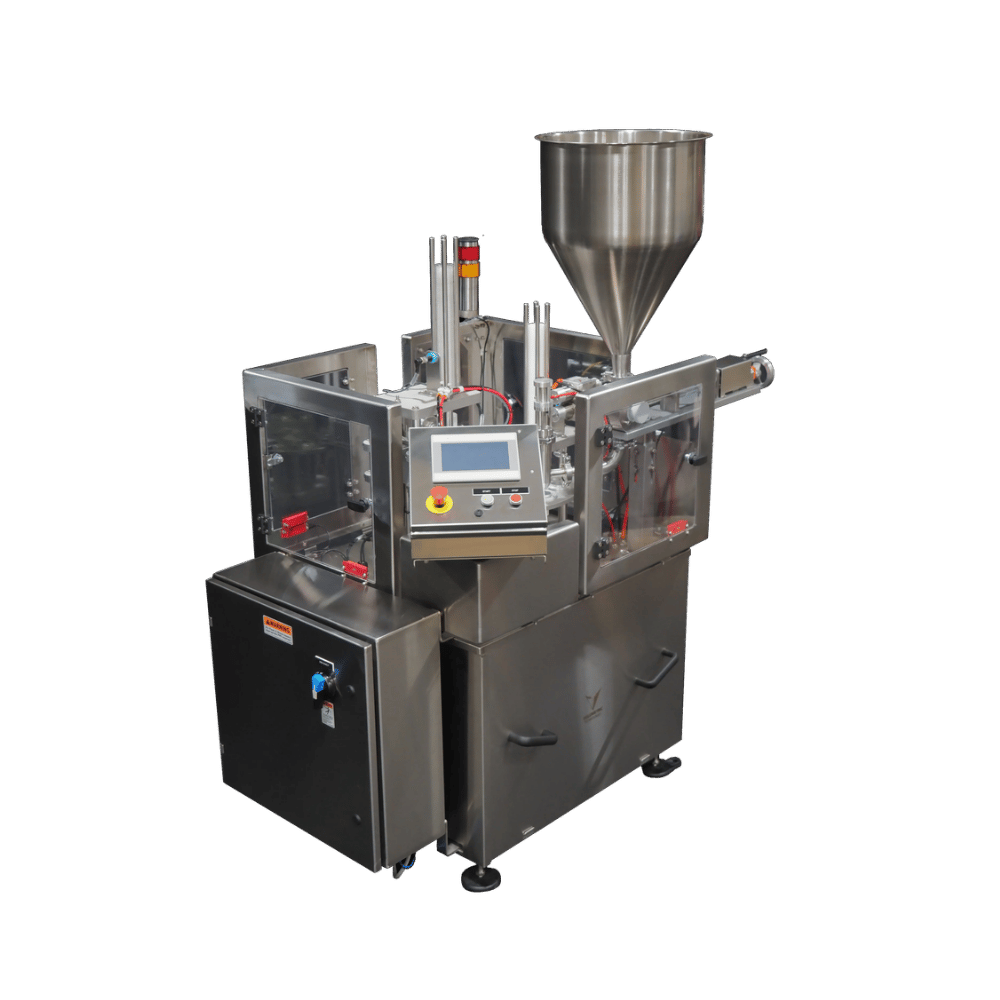
Our high volume Rotary Cup Machines are designed to denest, fill, seal, lid, and eject your products. Our Rotary Cup Machines are fully automatic and can deliver up to 45 cups per minute per lane, with configurations of 1 to 4 lanes.
Whether filling smooth products, products with particulates, or challenging formulations, Rotary Cup Fillers are engineered around the application to maximize accuracy, product quality, and uptime. Our cup machines can denest, fill, seal and lid your stackable containers with reliability, accuracy, and speed. All of our cup machines are servo driven for complete flexibility and come equipped with touch screen. The operator interfaces with menu driven controls for ease of use. Precision made and built to last, our cup machines and cup filler equipment combines innovative features customized for a perfect fit every time.

ACCURACY
up to +/- .25 of 1%

FILL VOLUME
1 oz - 64 oz

SPEED
Up to 45 Cycles
per minute/lane

PARTICULATE
SIZE
Up to 2”

WASHDOWN
Full washdown (CIP options)
Rotary Cup Filling Machines are best for:

Equipped with a solid-state PLC and a touchscreen HMI for flexibility to configure the equipment properly for your application. All control functions are adjustable via a menu-driven operator interface.
Benefits
Improve fill consistency
Reduce product giveaway
Increase throughput
Minimize operator intervention
Improve package presentation
Accommodate difficult products
Simplify operation and changeovers
Reduce downtime
Ideal Applications:
Sauces & Condiments, Dips & Spreads, Prepared Foods, Dairy Products, Single-Serve Dessert Products, Protein & Nutritional Products, Products with Particulates and so many more.
Options
Multiple filling technologies available
Custom nozzle designs
Sanitary/CIP configurations
Specialty product handling systems
Servo-driven enhancements
Integrated lidding systems
Container denesting systems
Date coding integration
Vision inspection integration
Custom container tooling
Stainless steel washdown packages
Accumulation and conveyor systems
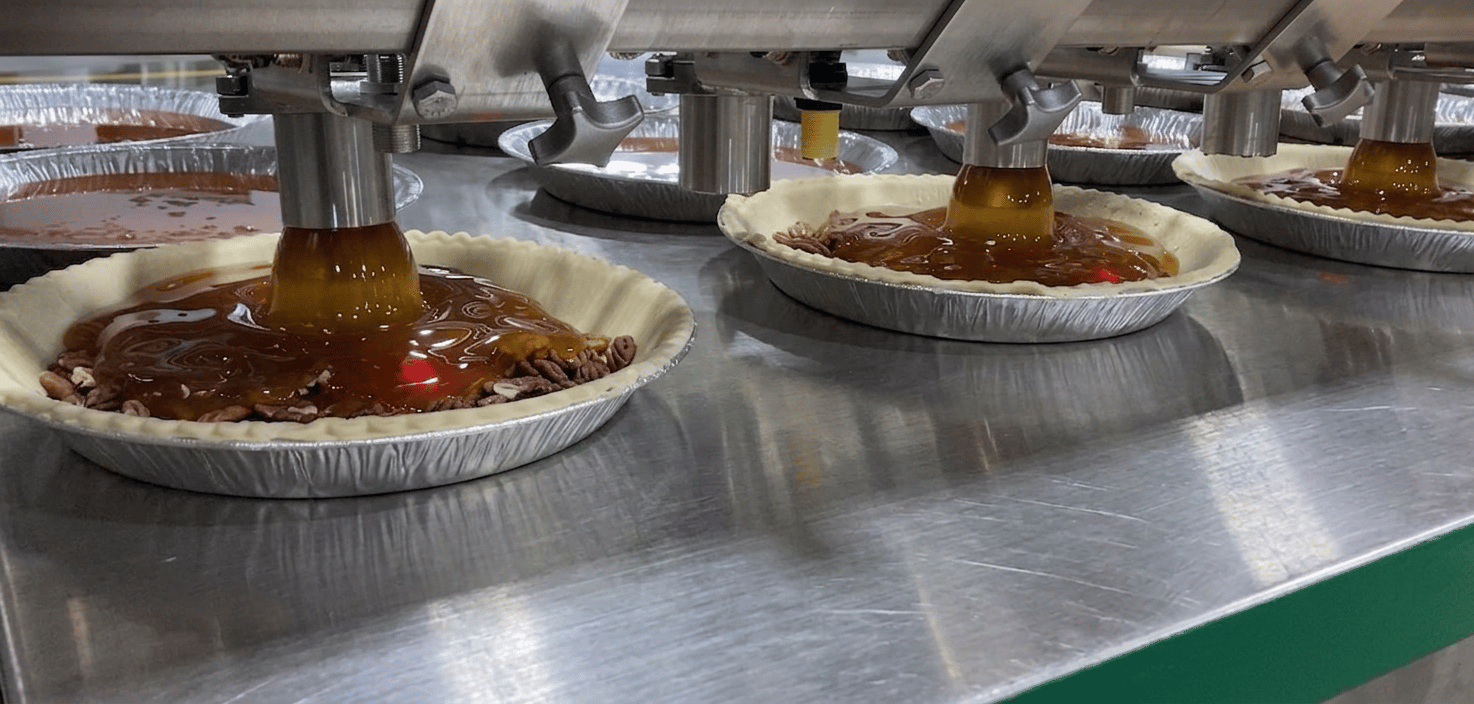
Nozzle design matters.
Nozzle design is often the difference between acceptable performance and exceptional performance. Volumetric Technologies has developed hundreds of nozzle configurations to address:
Clean cutoff
Drip prevention
Foaming, Stringy or Delicate products
Products with particulates
Custom deposit shapes
We are experts at nozzle design and execution.
Every product behaves differently.
Product viscosity, particulates, aeration, deposit characteristics, sanitation requirements, and production goals all influence system design. Volumetric Technologies evaluates these factors early in the process to ensure the filling solution is designed around the application—not forced into a standard configuration. We truly partner with you, which includes:
Application Testing & Validation
Custom Nozzle Engineering
USDA-Approved Materials
Designed, Built & Supported in the USA
FAT Video Confirmation
30+ Years of Filling Experience
From Our Blog


Your Trusted Source for Filling Machines
Volumetric Technologies is committed to providing the best liquid filling solutions tailored to your needs. With a focus on quality materials and user-friendly designs, you can rely on our products for consistent performance. Discover how our innovative technologies can elevate your production quality and efficiency today.
-
A rotary cup filling system automates multiple packaging steps around a circular, indexed platform. Depending on the configuration, the system can denest, fill, seal, lid, code, inspect, and handle finished containers within one compact machine.
Volumetric Technologies rotary cup systems are available in 1- to 4-lane configurations, allowing the system to be sized around your production requirements.
-
Containers are automatically denested and placed into carrier plates. The rotary platform indexes the containers through a series of stations, where operations such as filling, sealing, lidding, coding, and inspection take place.
Because each movement is indexed, the container is positioned consistently at each station for repeatable timing and reliable package handling.
-
When production volumes increase, adding lanes allows multiple containers to move through the same process simultaneously.
A 3- or 4-lane rotary system can provide significantly higher throughput while maintaining the compact footprint and coordinated operation that make rotary systems attractive. For manufacturers moving beyond lower-volume automation, it can provide a strong balance of speed, footprint, reliability, and investment.
-
Volumetric Technologies rotary cup filling systems can produce up to 40 cups per minute per lane, depending on the product, container, fill volume, seal type, and machine configuration.
That means lane configuration becomes an important part of sizing the system. A 1-lane machine and a 4-lane machine serve very different production requirements, even though they use the same basic rotary concept.
-
Start with your required production rate—both today and where you expect production to go.
A lower-lane configuration may make sense for moderate production needs, while 3- and 4-lane systems are designed for manufacturers requiring substantially greater throughput. Product characteristics, fill volume, sealing time, container handling, and other operations also affect the right configuration.
Volumetric Technologies looks at the complete application rather than simply recommending the highest number of lanes.
-
Yes. Multi-lane systems are designed to deliver consistent, repeatable filling across each lane.
The filling technology, product supply, nozzles, controls, and machine timing all need to work together. This becomes increasingly important as lane count and production speed increase.
-
Depending on the application, a rotary system can incorporate:
Container denesting
Filling
Foil or film sealing
Lid application
Date or lot coding
Vision inspection
Container handling
Combining these functions allows manufacturers to reduce manual handling and create a more consistent packaging process.
-
Standard Volumetric Technologies rotary cup systems can accommodate container volumes up to 32 ounces and container diameters up to 110 mm.
Custom applications may require additional engineering based on the container shape, dimensions, material, lid, and sealing requirements.
-
Rotary cup systems are used for products including dips, spreads, sauces, condiments, dairy products, prepared foods, desserts, nutritional products, and products containing particulates.
The rotary platform handles the package; the filling technology is selected around the product.
-
Volumetric Technologies can configure rotary cup systems with multiple filling technologies, including volumetric piston fillers and servo-driven positive displacement pump fillers, as well as application-specific filling solutions.
Having multiple technologies available matters because a thin sauce, thick dip, and product containing particulates may require very different approaches to filling.
-
Yes, when configured with the appropriate filling technology.
Particulate size, shape, concentration, and sensitivity should all be evaluated. Volumetric Technologies can configure the filling system, product pathways, and nozzles around the actual product.
-
Yes. Systems can be configured for die-cut foil or roll-stock film sealing, depending on the package.
Seal material, container construction, sealing temperature, dwell time, and production rate all need to work together to create a reliable seal.
-
Yes. Integrated lid handling and application can be incorporated into the rotary system so containers can be filled, sealed, and lidded as part of the same automated process.
This can eliminate another manual operation and help deliver a more consistent finished package.
-
Yes. Date coding and vision inspection can be integrated into the system.
Depending on the application, inspection can help verify specific package or process conditions before finished containers leave the machine.
-
One of the advantages of rotary technology is its compact layout. Multiple packaging operations are arranged around a circular platform rather than spread across a long linear machine.
For manufacturers considering higher-output 3- or 4-lane automation, that can be particularly valuable when production floor space is limited.
-
Rotary systems can be designed with quick-change carrier plate inserts and custom container tooling to simplify changeovers.
Rotary is particularly well suited to manufacturers with relatively stable packaging formats and longer production runs. If you're changing among dramatically different cups, lids, and package formats throughout the day, that should be discussed early in the application process.
-
Both can automate filling and multiple packaging operations, but their layouts and strengths are different.
A rotary system concentrates operations around an indexed circular platform, providing a compact footprint and repeatable process timing. An inline system arranges operations along a linear production path and can be advantageous when extremely high output or future station-by-station expansion is the priority.
For many manufacturers, especially those considering 3- or 4-lane production, rotary provides an attractive middle ground between production capacity, floor space, automation, and complexity.
-
A good indicator is when labor and production capacity are becoming constraints.
If operators are manually loading, filling, sealing, or lidding cups—and demand is becoming predictable—a rotary system can combine several of those operations into one automated process.
The business case becomes even stronger when future volume supports a multi-lane configuration and the same core package formats will be produced consistently.
-
Don't evaluate the machine on cups per minute alone. Look at fill accuracy, lane configuration, container handling, seal quality, changeover requirements, sanitation, controls, footprint, and long-term serviceability.
For a 3- or 4-lane system in particular, ask how the manufacturer approaches the entire process. Increasing lane count only creates value when filling, sealing, lidding, and container handling can all reliably keep pace.
-
Yes. Testing the actual product, cup, seal, and lid can help establish the appropriate filling technology and machine configuration before the system reaches your production floor.
For multi-lane applications, this is especially valuable because small application details can become much more important as production rates increase.
-
Volumetric Technologies designs and builds rotary cup filling systems in Red Wing, Minnesota, with applications, engineering, parts, and service support throughout the life of the equipment.